
Baby Incubators
Servo-controlled neonatal incubators for premature and low-birthweight infant care.
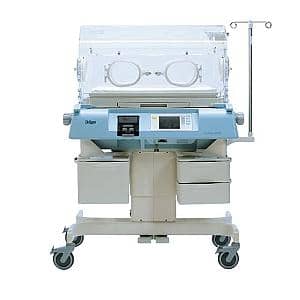
A premature infant weighing 1,000 grams cannot regulate body temperature. Hypothermia kills within hours. The incubator is life support.
Closed and open-bed neonatal incubators deliver precisely controlled microenvironments — temperature, humidity and oxygen concentration — that replace the physiological functions a premature infant cannot yet perform independently. Dräger Isolette and Fanem incubators provide servo skin-temperature control with ±0.1°C precision, humidity up to 95% RH for extremely premature infants, integrated weighing scales, pulse oximetry (SpO2) monitoring and a dedicated phototherapy port — reducing the number of separate devices required at the bedside. Jos•Hansen supplies, installs and maintains neonatal incubators at NICUs across East and Southern Africa, including in-country spare parts supply, preventive maintenance and biomedical engineer training.
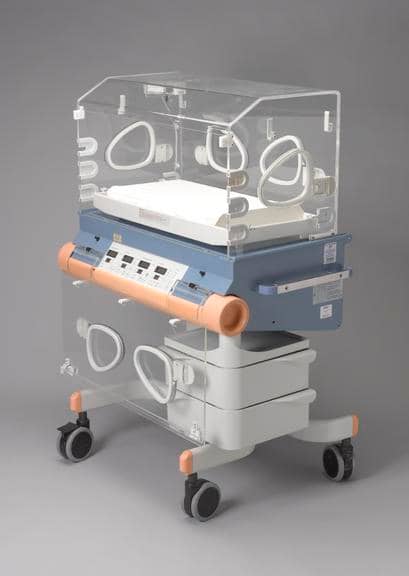
Servo thermoregulation
Skin-temperature servo mode continuously adjusts heater output based on a skin probe reading — maintaining the infant at the set skin temperature rather than the air temperature. This closed-loop control maintains warmth within ±0.1°C regardless of incubator door opening frequency, ambient temperature variation or the infant's own heat production changes during handling.
High-humidity skin protection
Infants born before 28 weeks have skin that is not yet a functional barrier — transepidermal water loss causes dehydration and heat loss simultaneously. Humidity levels up to 95% RH in the first weeks of life reduce water loss, maintain electrolyte balance and protect against skin breakdown, reducing the risk of infection entry through a compromised skin barrier.
Integrated monitoring and weighing
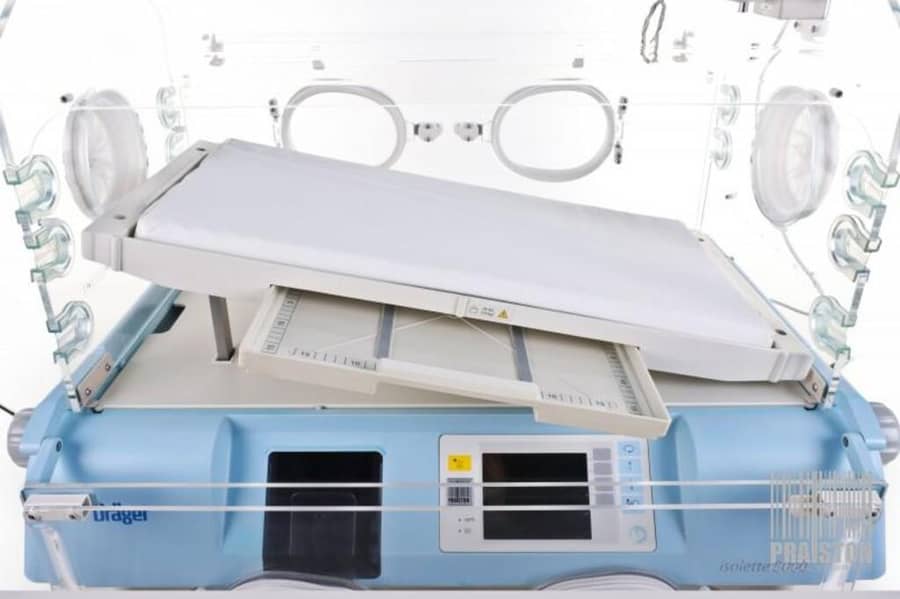
Built-in load-cell weighing allows daily weight measurement without removing the infant from the incubator — the key metric for nutritional management of premature newborns. Integrated SpO2 monitoring and a phototherapy lamp port reduce the number of separate devices at the bedside, simplifying nursing care and reducing alarm fatigue in congested NICUs.
Why neonatal thermoregulation determines survival.
Premature infants lack subcutaneous fat, brown adipose tissue reserves and the shivering reflex that term infants use to generate heat. Hypothermia (core temperature below 36.5°C) triggers metabolic acidosis, increases oxygen consumption, impairs surfactant function and directly worsens respiratory distress syndrome — the leading cause of death in premature infants. WHO data show that hypothermia contributes to approximately 25% of neonatal deaths in sub-Saharan Africa. Modern servo-controlled incubators with closed-bed design eliminate draughts, maintain a stable thermal environment and alarm immediately when temperature deviates — the primary intervention that reduces hypothermia-related neonatal mortality.
Humidity management for extremely premature skin.
At 24–28 weeks gestation, infant skin is translucent and functionally equivalent to a mucous membrane. Transepidermal water loss at this gestational age is 10–15 times higher than in a term infant. Without humidity supplementation, the resulting fluid shifts cause hypernatraemia, hyperkalaemia and haemoconcentration within 24 hours. Dräger Isolette incubators deliver humidity levels up to 95% RH in the first 10–14 days, with a programmable humidity reduction schedule as skin matures. The built-in HEPA-filtered airflow prevents airborne infection risk while maintaining the humidity level — the balance that open warm care systems cannot achieve.
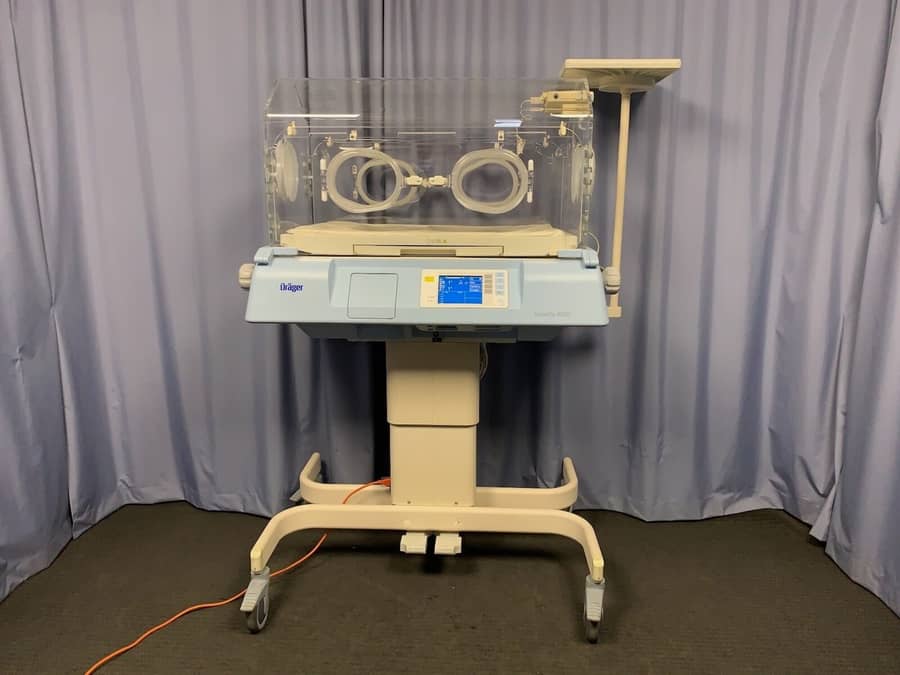
NICU equipment consolidation — one platform at the bedside.
Every device attached to a premature infant is a potential infection source, an alarm source and a workflow barrier. Incubators with integrated weighing, SpO2 monitoring and a phototherapy port replace three separate pieces of equipment at the bedside — a phototherapy unit, a pulse oximeter and a weighing scale. In under-resourced NICUs where floor space and device budgets are limited, this consolidation is clinically significant. Jos•Hansen configures each incubator to the clinical requirements of the receiving NICU, provides bedside commissioning and trains nursing staff on alarm management, skin probe placement and humidity protocols.
Technical specifications.
Temperature control
Servo skin or air mode · ±0.1°C set-point accuracy
Temperature range
25–37°C skin servo · 26–39°C air mode
Humidity
30–95% RH — programmable reduction schedule
Oxygen concentration
Blended O2 inlet compatible · O2 sensor port
Integrated features
Load-cell weighing (20g resolution) · SpO2 port · phototherapy lamp port
Standard
IEC 60601-2-19 · CE marked medical device
Servo skin temperature precision — the thermoregulation accuracy required to maintain premature infant thermal homeostasis without overcorrection
Maximum relative humidity — the level required for extremely premature infants (24–28 weeks) to prevent transepidermal water loss and maintain skin integrity
Proportion of neonatal deaths in sub-Saharan Africa attributable to hypothermia (WHO data) — the mortality burden that appropriate incubator use directly addresses
Why Baby.
Servo thermoregulation
Closed-loop skin-temperature servo control maintains warmth within ±0.1°C — continuously adjusting output to compensate for door openings, ambient changes and infant metabolic variation.
95% RH skin protection
High-humidity mode preserves skin integrity in extremely premature infants — reducing transepidermal water loss, electrolyte imbalance and infection entry through compromised skin.
Bedside consolidation
Integrated SpO2, 20g-resolution weighing and phototherapy port reduce the number of separate devices at the incubator — simplifying care and reducing alarm complexity in congested NICUs.
NICU-wide support
Jos•Hansen provides installation, biomedical engineer training, preventive maintenance, spare parts and calibration — one service contact for the full neonatal equipment estate.
Partner with Jos Hansen
Talk to our procurement and operations teams about your next infrastructure, healthcare or scientific deployment.