
Carbon & Sustainability Advisory
GHG Protocol corporate carbon footprint assessments, emission reduction pathway design and ESG reporting for African enterprises and project developers.
African businesses face carbon disclosure requirements from export buyers, investors and lenders.
Carbon disclosure is transitioning from voluntary to mandatory for African enterprises at a pace driven by export market requirements, development finance conditions and domestic regulatory development. EU Carbon Border Adjustment Mechanism requirements affecting East African exports take effect from 2026, and IFC is incorporating net-zero transition plans into project finance conditions. Jos•Hansen carbon advisory provides GHG Protocol-compliant carbon footprint assessments, emission reduction roadmaps and ESG disclosure frameworks that enable African enterprises to meet these obligations.

GHG Protocol compliant
Carbon assessments prepared to GHG Protocol Corporate Standard methodology covering Scope 1, 2 and 3 emissions, producing disclosures accepted by CDP, GRESB, GRI and major investor ESG frameworks.
CBAM ready
Carbon footprint assessments for East African exporters to the EU structured to meet Carbon Border Adjustment Mechanism product carbon content reporting requirements effective from 2026.
Reduction roadmaps
Emission reduction pathway designs identifying the highest-impact, most cost-effective reduction measures available to each organisation, with implementation sequencing matched to capital availability and operational priorities.
Scope 1, 2 and 3 carbon assessments meet investor ESG requirements.
The EU Carbon Border Adjustment Mechanism requires exporters of cement, steel, aluminium, fertiliser and hydrogen to the EU to declare embedded carbon content from 2026, with financial obligations for carbon above the EU ETS benchmark price. Jos•Hansen CBAM advisory assesses product-level carbon footprint against CBAM methodology requirements, identifies reduction opportunities to lower financial exposure, and prepares product carbon content declarations for EU import registration. Agricultural products are likely to be added to CBAM scope by 2030, making early assessment strategically important for East African food exporters.
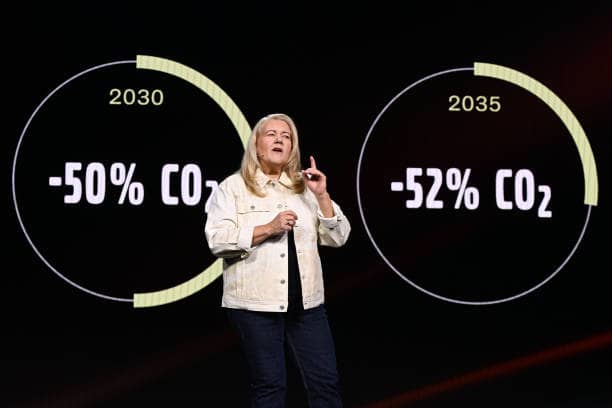
Emission reduction roadmaps prioritise the highest-impact interventions.
A carbon footprint assessment identifies the emission sources and scope categories that account for 80% of the total footprint, enabling reduction effort to be targeted where it has the greatest impact rather than distributed across all sources proportionally. Jos•Hansen reduction roadmaps assess technically and economically feasible reduction options for the top emission sources, with abatement cost curves ranking interventions by cost per tonne CO2e avoided. Implementation plans specify actions, capital requirements, expected emission reductions and verification methods for each measure, providing a board-level roadmap from current baseline to a defined net-zero or science-based target pathway.
CBAM compliance protects East African export market access.
The EU Carbon Border Adjustment Mechanism requires exporters to the EU to declare the embedded carbon content of exported goods from 2026, with financial obligations for carbon above the EU ETS benchmark price. Jos•Hansen CBAM advisory services assess product-level carbon footprint against CBAM methodology requirements, identify reduction opportunities to reduce CBAM financial exposure, and prepare the product carbon content declarations required for EU import registration. Agricultural products are likely to be added to CBAM scope by 2030, making early assessment and reduction investment strategically important for East African food exporters.

Technical specifications.
GHG standard
GHG Protocol Corporate Standard; Scope 3 Standard; ISO 14064-1
Scope coverage
Scope 1, 2 and 3 all 15 Scope 3 categories
Reporting frameworks
CDP, GRESB, GRI, SASB, TCFD, ISSB IFRS S2
Verification
ISO 14064-3 third-party verification; limited and reasonable assurance
CBAM coverage
Cement, steel, aluminium, fertiliser; agricultural pre-assessment available
Deliverables
Carbon inventory report, reduction roadmap, ESG disclosure, CBAM declaration
Emission scopes covered providing investor-grade climate disclosures meeting CDP, GRESB and TCFD reporting framework requirements
Year EU CBAM mandatory carbon content declarations take effect for East African exporters, requiring product carbon footprint assessments before that date
14064-3 third-party verification standard applied to Jos•Hansen carbon assessments, enabling submission to CDP, GRESB and investor ESG frameworks with assurance
Why Carbon.
Export market protection
CBAM-compliant carbon assessments protect East African exporters from financial penalties and market access restrictions as EU carbon border requirements take effect from 2026.
Investor disclosure ready
GHG Protocol and ISO 14064 compliant assessments with third-party verification satisfy CDP, GRESB, TCFD and ISSB disclosure requirements for institutional investors.
Prioritised reduction plan
Abatement cost curves and implementation roadmaps focus capital on the highest-impact, most cost-effective emission reductions rather than distributing effort proportionally.
Local context emission factors
East African grid emission factors, transport fuel data and agricultural emission parameters applied for accurate local-context carbon accounting versus generic global factors.
Partner with Jos Hansen
Talk to our procurement and operations teams about your next infrastructure, healthcare or scientific deployment.