
Precision Fertiliser Tools
Variable-rate fertiliser application systems guided by soil analysis data to cut input waste and lift crop nutrient uptake.
Blanket fertiliser rates applied without soil data waste 30-40% of input spend on land that cannot use it.
Fertiliser is the largest variable cost on most commercial and semi-commercial African farms, yet the majority of applications are based on blanket rate recommendations developed for average soils rather than the specific nutrient status of each field. Jos•Hansen precision fertiliser programmes combine soil analysis, leaf tissue testing and GPS-mapped variable-rate application to match nutrient supply exactly to crop demand across every zone of a farm. The result is a 15-25% reduction in total fertiliser spend while maintaining or improving yield, alongside a measurable reduction in nutrient runoff and soil acidification.
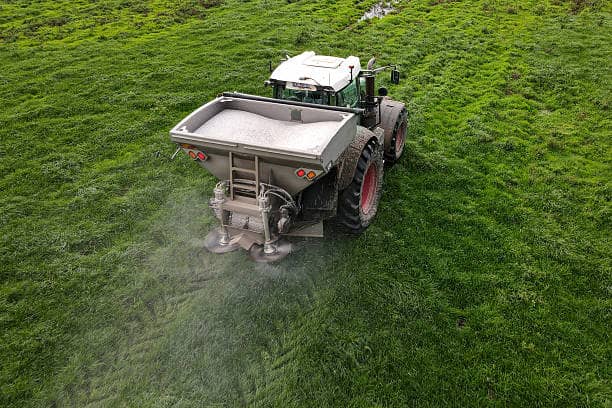
Soil analysis first
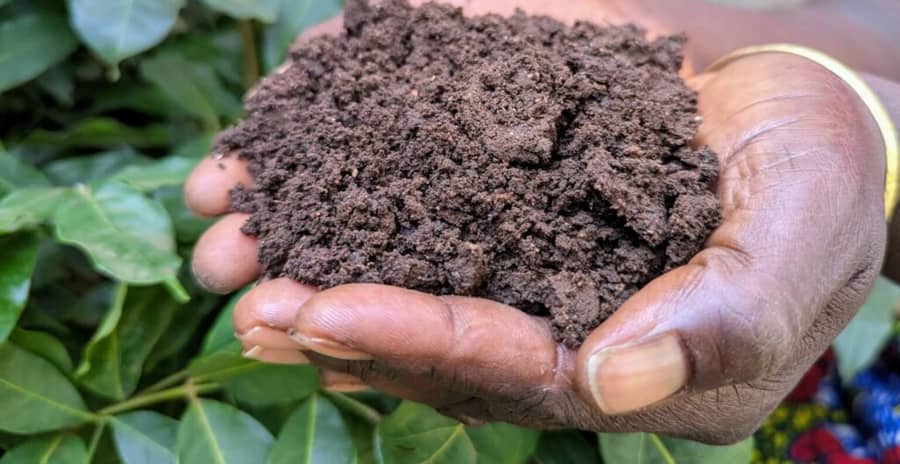
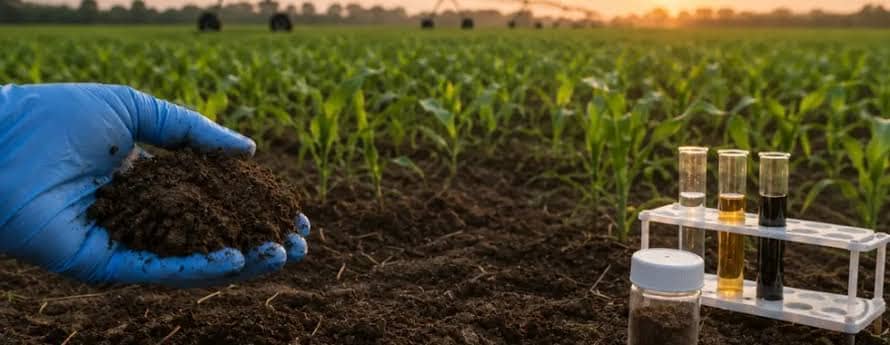
Geo-referenced soil sampling at 1-hectare resolution generates nutrient maps that identify the specific deficiencies and excesses in each field zone. Variable-rate application prescriptions built from these maps eliminate blanket over-application in high-fertility zones while correcting deficiencies in low-performing areas of the same field.
Leaf tissue testing
Leaf tissue analysis at key growth stages confirms whether applied nutrients are being taken up by the crop or are fixed in unavailable soil forms. Mid-season tissue test results allow in-season fertiliser adjustments that rescue yield before the damage is visible, not after.
Fertigation integration
For irrigated systems, precision fertiliser programmes integrate with drip fertigation to deliver soluble nutrients directly to the root zone at the exact growth stages when demand is highest. Fertigation reduces total fertiliser requirement by 30-40% versus broadcast application for equivalent crop uptake.
Geo-referenced soil sampling eliminates blanket rate guesswork.
Jos•Hansen soil sampling teams collect geo-referenced composite samples at defined grid densities across commercial farm blocks, with laboratory analysis covering pH, organic carbon, available phosphorus, potassium, calcium, magnesium, sulphur and a full micronutrient panel. Laboratory reports are returned with field-mapped nutrient status and a variable-rate fertiliser prescription for each sampled zone, formatted for import into variable-rate application systems. The prescription specifies product, rate, timing and application method for each nutrient across the full crop calendar, not only nitrogen. Jos•Hansen agronomists review prescriptions at planting, mid-season tissue test and harvest, adjusting the following season's plan based on crop response and yield map data.

Secondary nutrients and micronutrients unlock the full value of NPK.
Nitrogen, phosphorus and potassium applications fail to deliver expected yield gains when secondary nutrients including sulphur, calcium and magnesium are deficient, and when micronutrients including zinc, boron and manganese are below critical thresholds. These deficiencies are widespread in East African soils but invisible without tissue or soil analysis. Jos•Hansen precision programmes diagnose secondary and micronutrient deficiencies as part of every soil analysis report and prescribe targeted corrective products at the identified limiting rates, rather than applying generic compound fertilisers that may or may not contain the specific limiting element. Correcting a zinc deficiency with a targeted foliar spray costs USD 8-12 per hectare and can recover 15-20% of yield that would be lost without intervention.
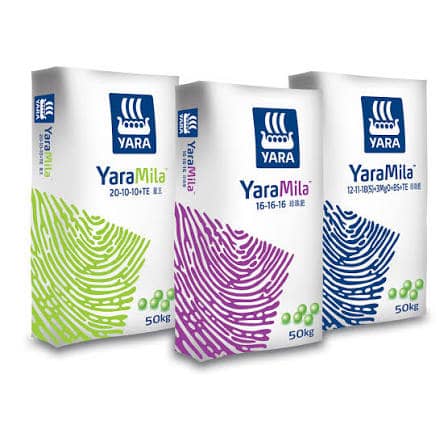
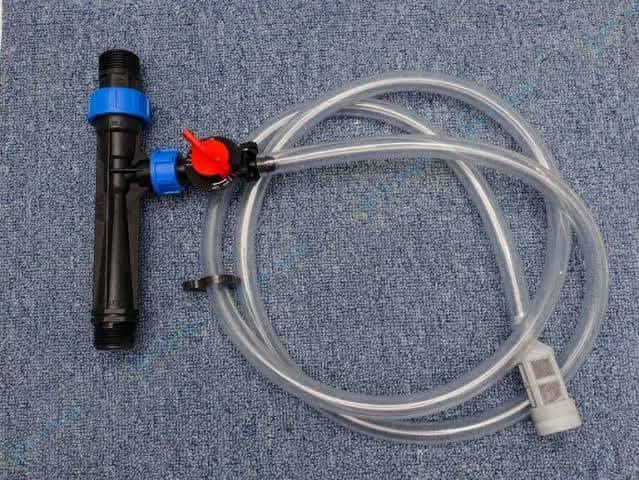
Fertigation delivers nutrients at root level when crop demand peaks.
Drip fertigation injects soluble fertilisers directly into the irrigation stream, delivering nutrients to the active root zone on a programmed schedule matched to the crop growth curve. Application efficiency for fertigated nutrients reaches 85-95% of applied product taken up by the crop versus 55-65% for broadcast granular applications, reducing total fertiliser volume required for equivalent nutrient uptake. Jos•Hansen designs fertigation programmes for commercial vegetable, smallholder horticulture and export-market tomato systems, specifying product selection, injection concentrations, timing and frequency across the crop calendar. Fertigation scheduling integrates with soil moisture monitoring data to match irrigation events to actual crop water demand, not a fixed calendar.
Technical specifications.
Soil analysis panel
pH, organic carbon, N, P, K, Ca, Mg, S, Zn, B, Mn, Cu, Fe (full micronutrient panel)
Sampling density
1-hectare grid for commercial farms, composite sampling for smallholder plots
Fertiliser systems
Variable-rate granular, fertigation, foliar spray, soil application
Crop systems supported
Maize, tomato, potato, bean, horticulture, sorghum, export vegetables
Report turnaround
10-14 days from sample submission to full prescription report
Software compatibility
Variable-rate prescriptions exportable to ISO-XML and standard VRA controller formats
Reduction in total fertiliser spend achievable on commercial farms using soil-analysis-guided variable-rate application versus blanket rate programmes across field blocks
Maximum nutrient uptake efficiency of fertigated soluble fertiliser applied directly to the root zone at crop demand peaks versus 55-65% efficiency for broadcast granular application
Average yield improvement achievable on severely degraded soils when precision nutrient correction is combined with soil biology restoration programmes within 2-3 seasons
Why Precision.
Site-specific prescription
Variable-rate prescriptions built from 1-hectare geo-referenced soil samples eliminate blanket over-application in high-fertility zones while correcting genuine deficiencies in low-performing areas.
In-season adjustment
Mid-season leaf tissue testing identifies nutrient uptake failures before they become visible symptoms, allowing corrective foliar application while the crop can still recover yield.
Runoff and acidification reduction
Precision application matching nutrient supply to demand reduces nitrogen runoff, phosphorus fixation and the soil acidification caused by repeated over-application of ammonium-based fertilisers.
Input cost recovery
The soil analysis and prescription cost is recovered within the first season through fertiliser savings of 15-25%, with continuing efficiency gains as each season's data informs the next cycle.
Partner with Jos Hansen
Talk to our procurement and operations teams about your next infrastructure, healthcare or scientific deployment.