
LED Phototherapy Units
High-irradiance narrow-spectrum LED therapy — the fastest and safest treatment for neonatal jaundice.
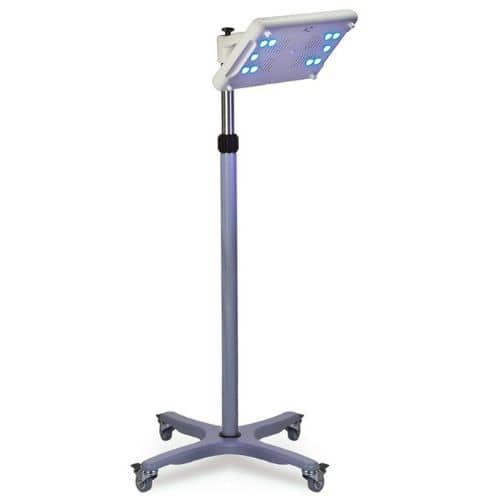
Neonatal jaundice affects 60% of term infants in the first week of life. Untreated severe hyperbilirubinaemia causes permanent brain damage within days.
LED phototherapy units deliver high-irradiance narrow-spectrum blue light at 460–490 nm — the absorption peak of bilirubin — converting unconjugated bilirubin in skin and subcutaneous tissue to water-soluble photoisomers that are excreted renally without requiring hepatic conjugation. Natus BiliBed and GE Lullaby phototherapy systems deliver irradiance above 30 μW/cm²/nm (intensive phototherapy threshold), provide full-body overhead and double-surface (overhead + fibre-optic blanket) coverage for severely jaundiced neonates, and use LED technology with 20,000-hour rated lifespan — eliminating the bulb replacement costs that made conventional fluorescent phototherapy unsustainable in low-resource settings. Jos•Hansen supplies phototherapy units, irradiance meters, eye shields and bili-blankets with local technical support across East Africa.
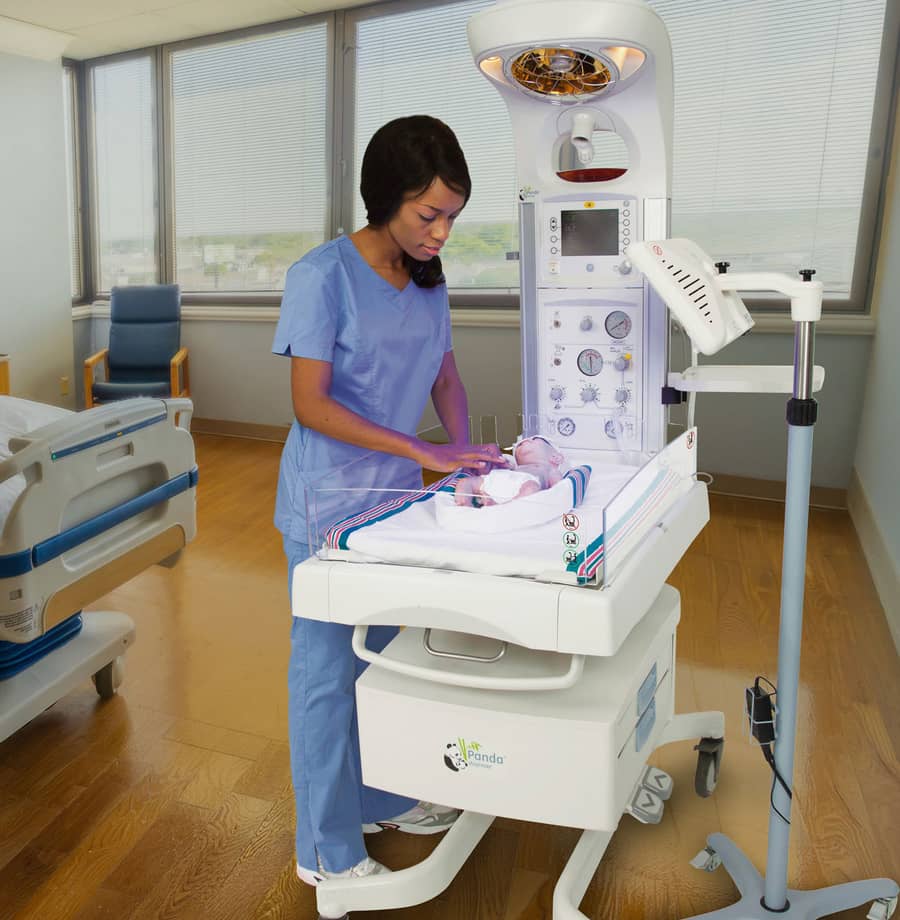
Narrow-spectrum bilirubin targeting
Peak emission at 460–490 nm matches the peak bilirubin absorption spectrum precisely — maximising photoisomerisation rate while eliminating UV wavelengths (which cause DNA damage) and infrared wavelengths (which cause thermal burns). LED phototherapy achieves intensive-level irradiance (>30 μW/cm²/nm) at safe operating temperatures, enabling double phototherapy for severe hyperbilirubinaemia without the heat burden of fluorescent systems.
40% faster bilirubin reduction
Published randomised trials comparing LED versus conventional fluorescent phototherapy show LED systems reduce serum bilirubin 30–40% faster — measured as μmol/L decline per hour of treatment. Faster bilirubin reduction means shorter NICU stays, earlier maternal bonding, reduced breastfeeding interruption and faster bed turnover in NICUs where phototherapy cots are the binding constraint on admissions.
20,000-hour LED lifespan
Conventional fluorescent phototherapy tubes require replacement every 1,000–2,000 hours — frequently in African NICUs where procurement delays mean units are used well past rated lifespan, producing inadequate irradiance without clinical awareness. LED phototherapy units operate at full irradiance for 20,000+ hours with no scheduled bulb replacement, making ongoing irradiance reliability predictable and eliminating the consumable cost of tube replacement entirely.
The scale of neonatal jaundice in Africa — and why LED matters.
Neonatal hyperbilirubinaemia affects approximately 60% of term infants and 80% of preterm infants in the first week of life. In sub-Saharan Africa, where glucose-6-phosphate dehydrogenase (G6PD) deficiency affects 15–25% of male neonates and greatly accelerates bilirubin accumulation, severe jaundice rates are significantly higher than in high-income countries. Untreated severe hyperbilirubinaemia (above 340 μmol/L in term infants) causes bilirubin-induced neurological dysfunction — presenting clinically as acute bilirubin encephalopathy and progressing to kernicterus, characterised by athetoid cerebral palsy, hearing loss and cognitive impairment. WHO data identify neonatal jaundice as a leading preventable cause of neurodevelopmental disability in Africa. LED phototherapy at intensive irradiance levels treats the majority of severe jaundice cases without exchange transfusion.
Double phototherapy for severe hyperbilirubinaemia.
Single overhead phototherapy exposes only the surface facing the light source — approximately 35% of total skin surface area in a supine infant. Double phototherapy (overhead LED unit combined with a fibre-optic bilirubin blanket beneath the infant) exposes both dorsal and ventral skin surfaces simultaneously, roughly doubling the effective skin surface area under treatment. Double phototherapy reduces bilirubin 60–70% faster than single overhead therapy — the intervention that prevents exchange transfusion in infants whose bilirubin continues to rise on single phototherapy. Jos•Hansen supplies GE Lullaby and Natus BiliBed combinations as complete double phototherapy sets, including the fibre-optic blanket pad and connecting light source.

Irradiance monitoring — ensuring phototherapy is actually working.
Phototherapy irradiance below 6–10 μW/cm²/nm (standard threshold) has minimal clinical effect. Irradiance above 30 μW/cm²/nm (intensive threshold) produces the fastest clinically significant bilirubin decline. Fluorescent tubes that have exceeded their rated lifespan commonly produce irradiance below the standard threshold — rendering phototherapy ineffective while appearing clinically active. LED units maintain full irradiance throughout their rated lifespan. Jos•Hansen supplies calibrated irradiance meters alongside all phototherapy units, enabling ward staff to verify actual delivered irradiance before treating each patient — the quality assurance step that confirms treatment is operating at the intensity required to reduce bilirubin.
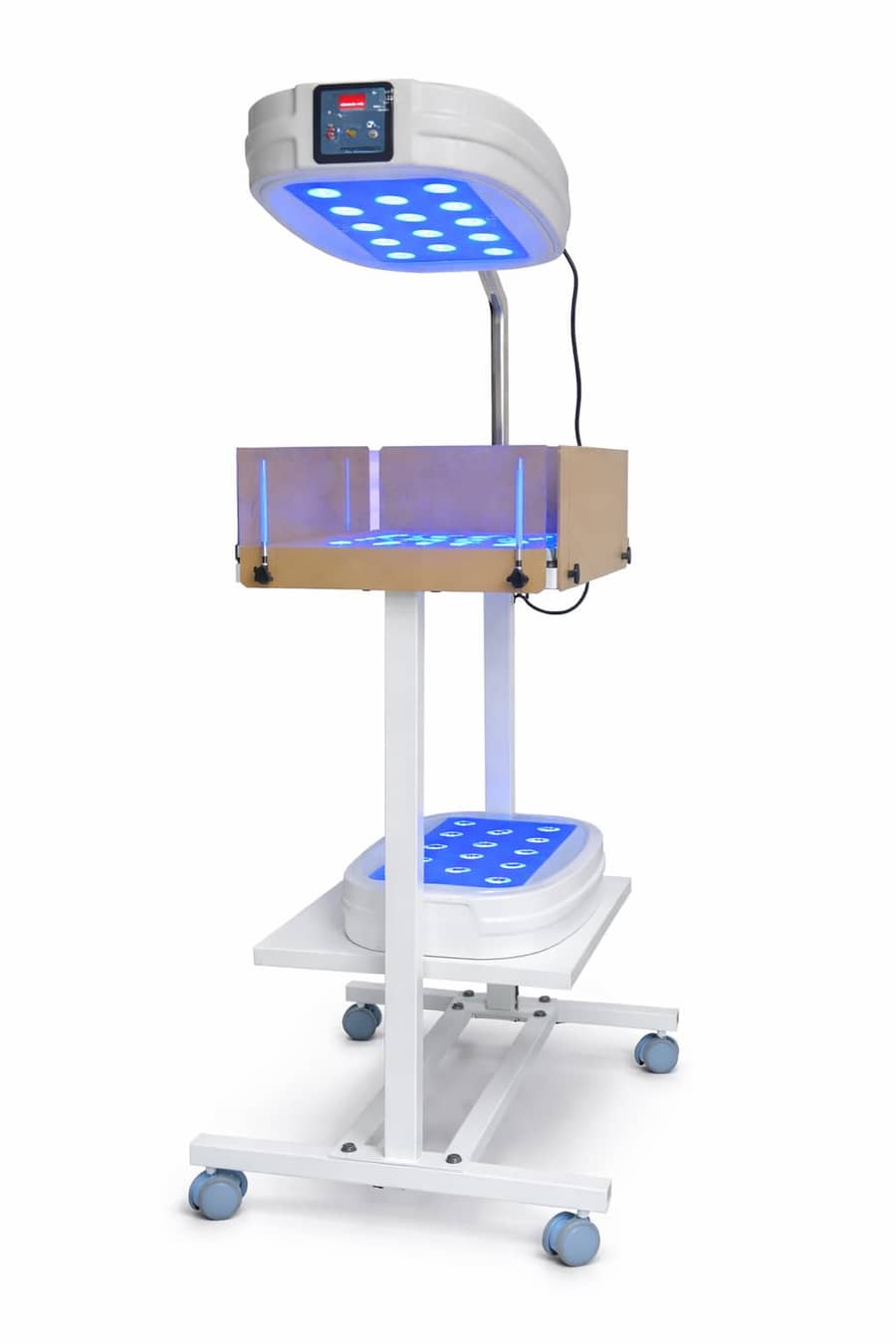
Technical specifications.
LED wavelength
460–490 nm peak (blue spectrum bilirubin absorption)
Irradiance
> 30 μW/cm²/nm at standard treatment distance (intensive)
LED lifespan
20,000+ hours — no scheduled bulb replacement
Coverage modes
Single overhead · double surface (overhead + bili-blanket)
Safety
No UV emission · low heat output · IEC 60601-2-50 compliant
Accessories
Eye shields · bili-blanket fibre-optic pad · calibrated irradiance meter
Faster bilirubin reduction versus conventional fluorescent phototherapy — published randomised trial data comparing LED and fluorescent systems in term and preterm neonates
μW/cm²/nm — intensive phototherapy irradiance threshold delivered by LED units at standard treatment distance, activating maximum bilirubin photoisomerisation
Hour LED lifespan with no irradiance degradation — eliminating bulb replacement cost and the under-irradiance risk of overrun fluorescent tubes in resource-limited NICUs
Why LED.
Narrow-spectrum precision
460–490 nm peak emission targets the bilirubin absorption maximum — maximising photoisomerisation while eliminating UV and infrared wavelengths that cause skin and thermal injury.
30–40% faster treatment
Faster bilirubin decline means shorter NICU stays, earlier maternal bonding, reduced breastfeeding interruption and faster phototherapy bed turnover in high-demand NICUs.
20,000-hour reliability
LED lifespan eliminates bulb replacement consumable costs and the irradiance uncertainty of overrun fluorescent tubes — full-intensity treatment for the lifetime of the unit.
Complete accessory supply
Jos•Hansen supplies irradiance meters, eye shields and bili-blanket pads alongside all phototherapy units — with local technical support and PPM across East Africa.
Partner with Jos Hansen
Talk to our procurement and operations teams about your next infrastructure, healthcare or scientific deployment.