
RO Water Treatment Systems
AAMI/ISO 23500-compliant ultrapure water systems — from single-station units to central dialysis loop supply.
Water quality is not a utility issue in dialysis. It is a patient safety issue. A patient is exposed to 600 litres of dialysis water every month. That water must be ultrapure.
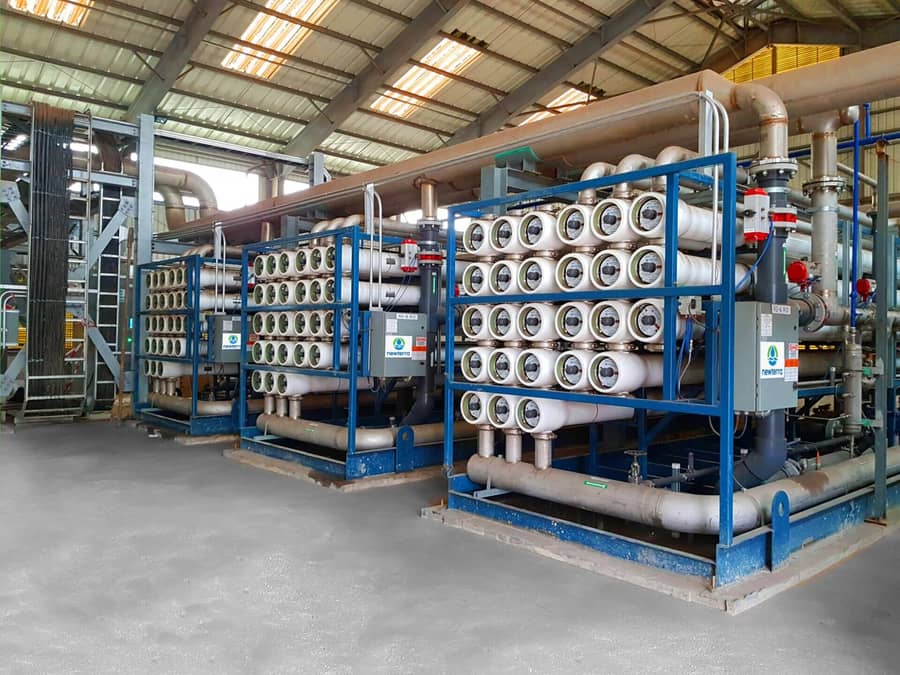
Each haemodialysis session exposes a patient to 120–150 litres of dialysate — produced by mixing purified water with bicarbonate and acetate concentrates at the machine. The purified water must meet AAMI/ISO 23500 ultrapure standards: bacterial colony count below 0.1 CFU/mL, endotoxin below 0.03 EU/mL, and chemical contaminant levels orders of magnitude below drinking water standards. Any contamination crosses directly into the patient's bloodstream through the dialyser membrane. Jos•Hansen supplies, installs and validates reverse osmosis water treatment systems from B. Braun Avitum (Germany) and Evoqua Water Technologies (USA) — from 20 L/hr single-station units for satellite dialysis rooms to 500+ L/hr central loop systems supplying 10–20 chair hospital dialysis centres — with full IQ/OQ/PQ commissioning and ongoing AAMI water quality monitoring under service contract.
AAMI/ISO 23500 ultrapure water — a patient safety requirement, not a utility standard
Dialysis-grade water must contain less than 0.1 CFU/mL bacteria and 0.03 EU/mL endotoxin — far stricter than drinking water standards. Chloramine in municipal water causes haemolytic anaemia in dialysis patients; aluminium causes dialysis encephalopathy. The RO system is the only treatment that removes all AAMI-specified contaminants before water enters the dialysis machine.
System sizing — from single-station satellite to 20-chair central loop
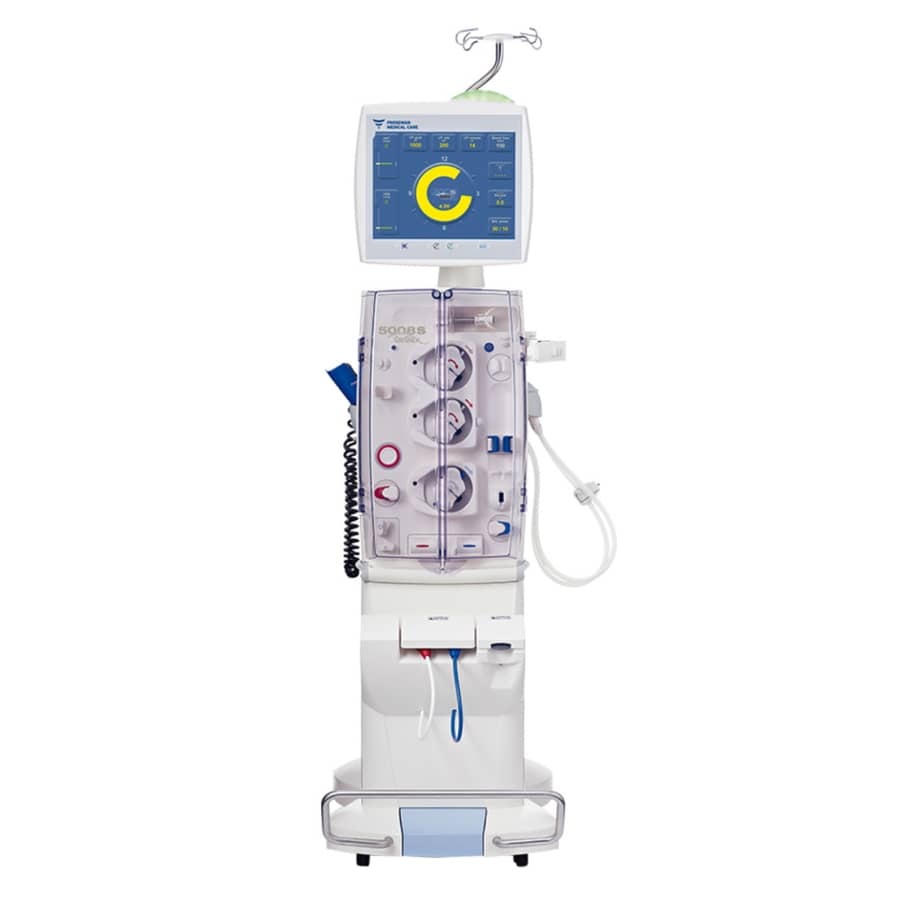
A single Fresenius 5008S at 500 mL/min requires approximately 30–35 L/hr of purified water. A 10-chair centre running two shifts needs a central RO system producing 350–450 L/hr with a distribution loop. Jos•Hansen specifies the correct system based on feed water quality analysis, chair count and session schedule — not a generic spec.
Full IQ/OQ/PQ validation — the documentation accreditation requires
IQ confirms installation as specified. OQ confirms the system operates within defined parameters. PQ confirms consistent AAMI/ISO 23500 compliance under routine operating conditions. Jos•Hansen provides the complete validation package at commissioning — microbiological and chemical test reports required for KHRA, JCI and ISO 15189 accreditation.
How RO purification works — why every stage matters.
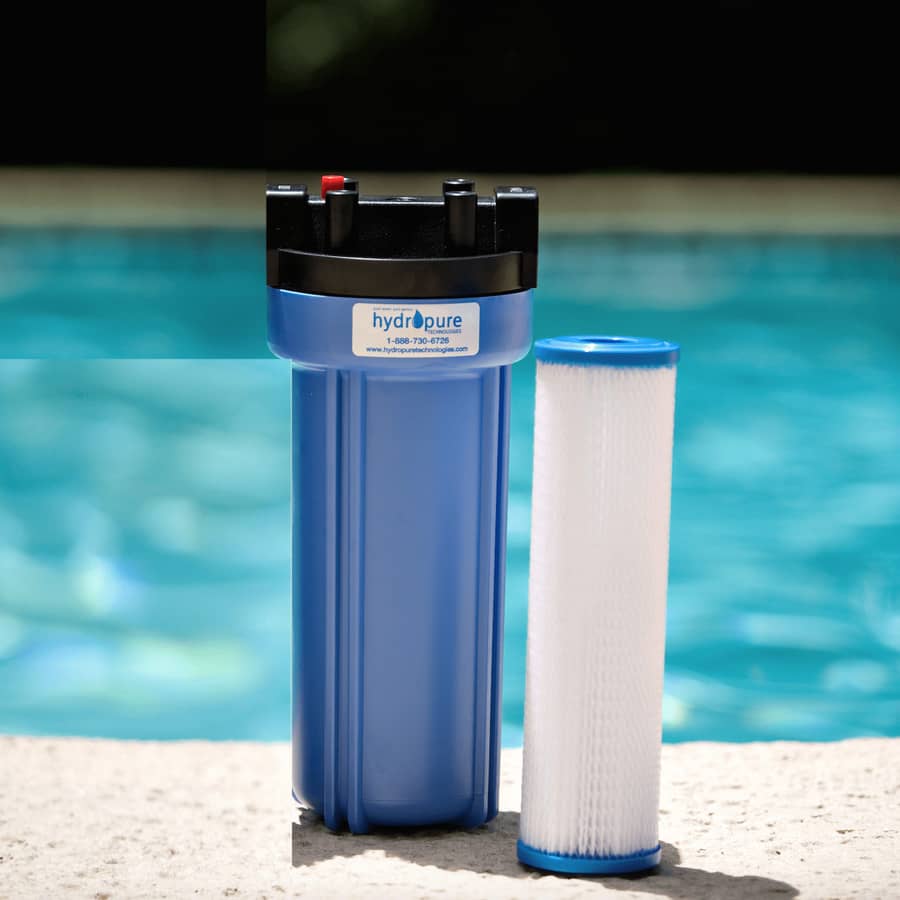
Dialysis RO treatment runs in series: sediment pre-filtration removes turbidity; activated carbon removes chloramine; water softening prevents membrane scaling; RO membrane filtration at 200–600 psi rejects 95–99% of dissolved solids, bacteria and endotoxins; UV disinfection prevents biofilm in the distribution loop. Missing or bypassing any stage compromises water quality — often silently, until the next test.
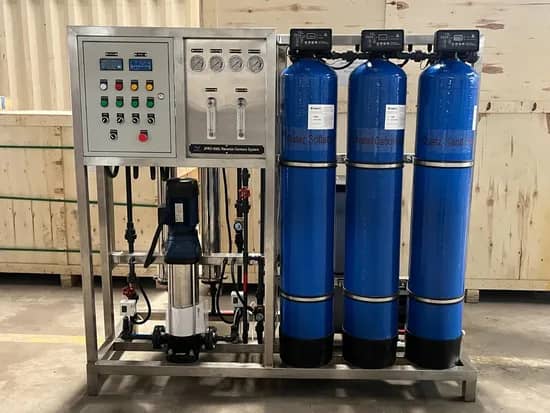
Ongoing water quality monitoring under service contract.
Commissioning validation is the baseline — not the endpoint. AAMI requires daily conductivity checks, monthly bacteriological cultures and monthly endotoxin testing. Jos•Hansen's PPM contract covers all required tests, records results in the site's water quality log and triggers membrane replacement or system sanitisation before results breach action limits.
Site-specific specification for East African water sources.
Nairobi municipal water, borehole sources and tank supply vary significantly in turbidity, TDS, iron content and bacterial load. Jos•Hansen conducts a feed water quality analysis before specifying any system — designing the pre-treatment train for actual incoming water, not generic parameters. The same RO membrane works very differently on municipal versus borehole feed.
Technical specifications.
Platforms
B. Braun Avitum Dialog+ · Delphi · Evoqua AquaPure Medical series
Water standard
AAMI/ISO 23500 ultrapure dialysis water
System types
Single-pass RO · Double-pass RO · Central distribution loop
Capacity range
20 L/hr (single station) → 500+ L/hr (central 20-chair)
Contaminant removal
>99.9% bacteria · >99.9% endotoxin · chloramine · aluminium · all AAMI chemical limits
Validation
Full IQ/OQ/PQ · monthly microbiological + endotoxin testing under service contract
Of dialysis water a patient is exposed to each month — making ultrapure water quality the most critical non-clinical determinant of patient safety in any dialysis programme
Bacteria and endotoxin reduction through multi-stage RO and ultrafiltration — meeting AAMI/ISO 23500 limits of <0.1 CFU/mL bacteria and <0.03 EU/mL endotoxin
Full validation documentation at commissioning — required for KHRA facility inspection, JCI accreditation and ISO 15189 dialysis unit certification
Why RO.
AAMI/ISO 23500 validated
Every RO system commissioned by Jos•Hansen is validated to AAMI/ISO 23500 before the first patient session — with microbiological and endotoxin test reports confirming compliance.
Site-specific specification
Feed water quality analysis at each site before specification — pre-treatment designed for actual incoming water quality, not generic parameters.
Ongoing water quality monitoring
Monthly bacteriological cultures and endotoxin testing under service contract — the continuous monitoring that confirms water quality between commissioning events.
PPM and membrane replacement
Scheduled membrane replacement, carbon filter changes and system sanitisation — maintained before degradation, not after out-of-specification results.
Related products.
Partner with Jos Hansen
Talk to our procurement and operations teams about your next infrastructure, healthcare or scientific deployment.